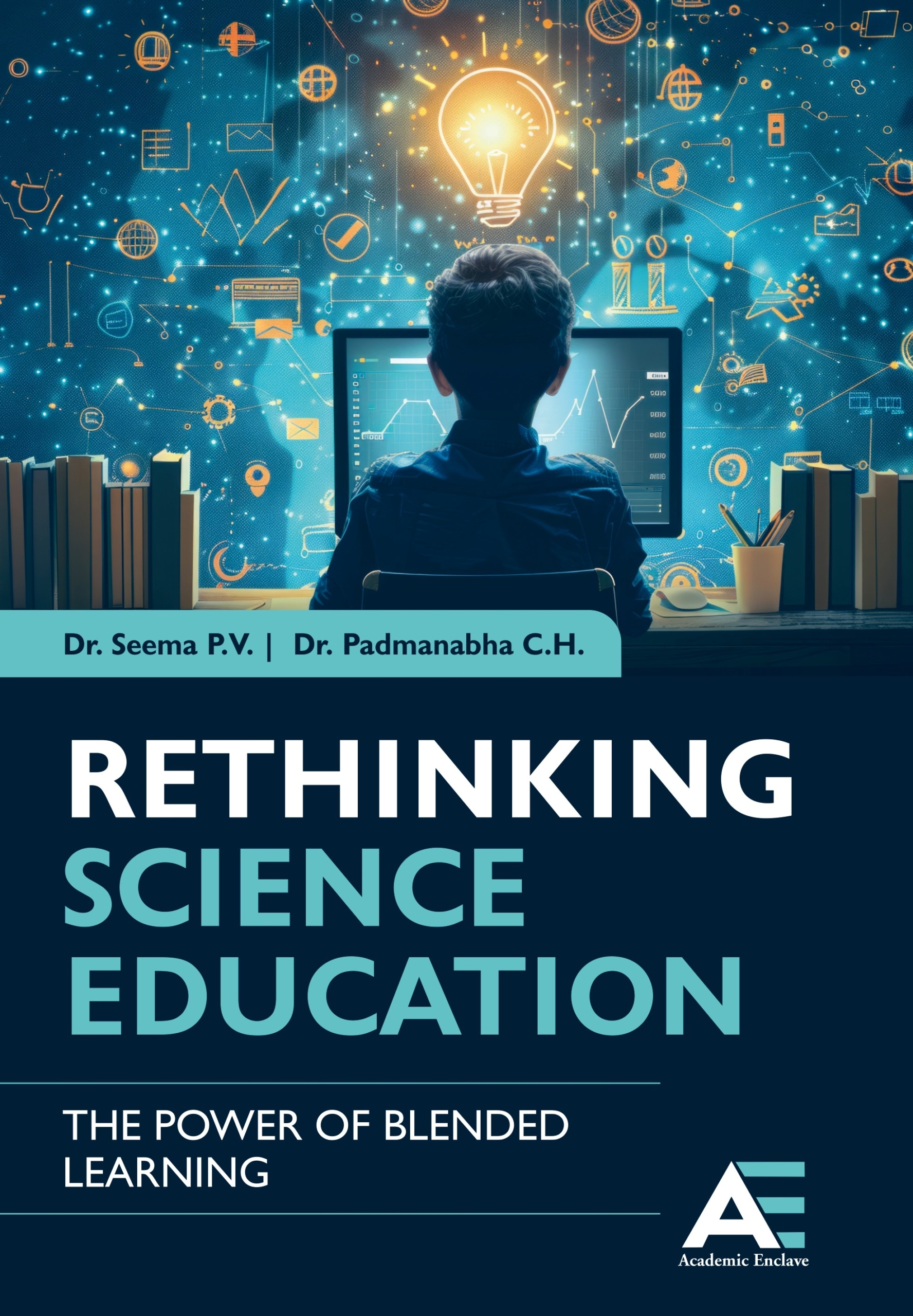
This book has been developed based on the Doctoral thesis, which has brought a paradigm shift from conventional teaching centric to learner centric i.e.technology-based approach and new trend in education intends to create teachers/teacher trainees as reflective practitioners. This book aims to contribute to the field of education by providing useful insights for postgraduate students, teachers, researchers, and educational practitioners. The author made an attempt to foster metacognitive skills, self-efficacy and academic achievement among secondary school students. The book also encourages further research and promotes effective teaching practices through the use of blended learning strategies.
Dr. Seema P. V. is presently working as a Associate professor in Institute of Education Srinivas university, Pandeshwara, Mangaluru in Karnataka. She has completed her M.Sc. (Chemistry), from Kuvempu University, Shivamogga and M.Ed. from St. Anns College of Education, Mangalore. She obtained her Ph.D. degree in Education from Srinivas University Mangaluru in the year 2024. She also Cleared her National Eligibility Test (NET) and Karnataka State Eligibility Test (KSET) in Education. She has published many articles in reputed journal.
Dr. Padmanabha C.H. is presently working as a Associate Professor and Dean of Institute of Education, Srinivas University, Mangalore, Karnataka, India. He holds an M.Sc. in Yogic Science from Mangalore University, M.Sc. in Zoology from Kuvempu University, and an M.Ed. from St. Ann’s College of Education, Mangalore. He has completed his Ph.D. (Education) and qualified for the Karnataka State Eligibility Test (K-SET) in Education. His academic responsibilities include teaching and mentoring graduate-level teacher education students. she has published many articles in reputed journals, also guiding Ph.D. students.
Preface
1. Introduction
1.0 Introduction1
1.1 The Origin of the Problem3
1.2 Conventional Method of Teaching4
1.3 Modern Technology in Education5
1.4 Digital Classrooms in Education6
1.5 Rationale for the Selection of Blended Learning Approach9
1.6 Metacognitive Skills19
1.7 Academic Achievement48
1.8 Science Education in Secondary School55
1.9 Need and Significance of the Study67
1.10. Role of Teacher in Blended Learning Environment72
1.11 Research Question:75
1.12 Title of the Study76
1.13 Objectives of the Study79
1.14 Hypotheses of the study:79
1.15 Delimitation of the study:80
1.16 Chapter Scheme80
1.17 Conclusion:81
2. Review of Related Literature83
2.1 Review of Related Literature83
2.2 Literature review of Blended Learning84
2.3. Studies on Self-Efficacy102
2.4 Studies on Academic Achievement106
2.5 Studies Related to Scientific Reasoning Ability117
2.6 Discussion120
3. Methodology121
3.1 Introduction121
3.2 Design of the Present Study122
3.3 Research Method123
3.4 Variables of the Study123
3.5 Population of the Study126
3.6 Formation of Experimental Design129
3.7 Objectives of the Study130
3.8 Hypothesis of the study130
3.9 Tools Used in the Study:131
3.10 Specification of the Task Involved in the Preparation of Instructional Materials.131
3.11 Construction of Metacognitive Skill Tool134
3.12 Construction of Scientific Reasoning Ability Test (Srat)136
3.13 Construction of Achievement Test140
3.14 Procedure of the Study152
3.15 Statistical Techniques used for Data Analysis152
3.16 Conclusion153
4. Data Analysis and Interpretation155
4.0 Introduction155
4.1 Analysis of the objective one156
4.2 Analysis of objective two157
4.3 Analysis of Objective three:158
4.4 Analysis of objective four161
4.5 Analysis of Objective five163
4.6 Analysis of covariance: 165
4.7 Analysis and interpretation of objective seven168
4.8 Analysis of Objective Eight:171
4.9 Conclusion174
5. Conclusion and Summary175
5.1 Introduction: 175
5.2 Need for the Study176
5.3 Statement of the Problem178
5.4 Title of the Study178
5.5 Variables of the study180
5. 6 Objectives of the proposed study: 180
5.7 Hypotheses of the study:181
5.8 Methodology of the Study182
5.9 Tools Used for the Study:183
5.10 sample of the study:183
5.11 Procedure of the Study:183
5.12 Statistical Techniques used for the Study184
5.13 Conclusion 186
Bibliography188



Reviews
There are no reviews yet.