
Description
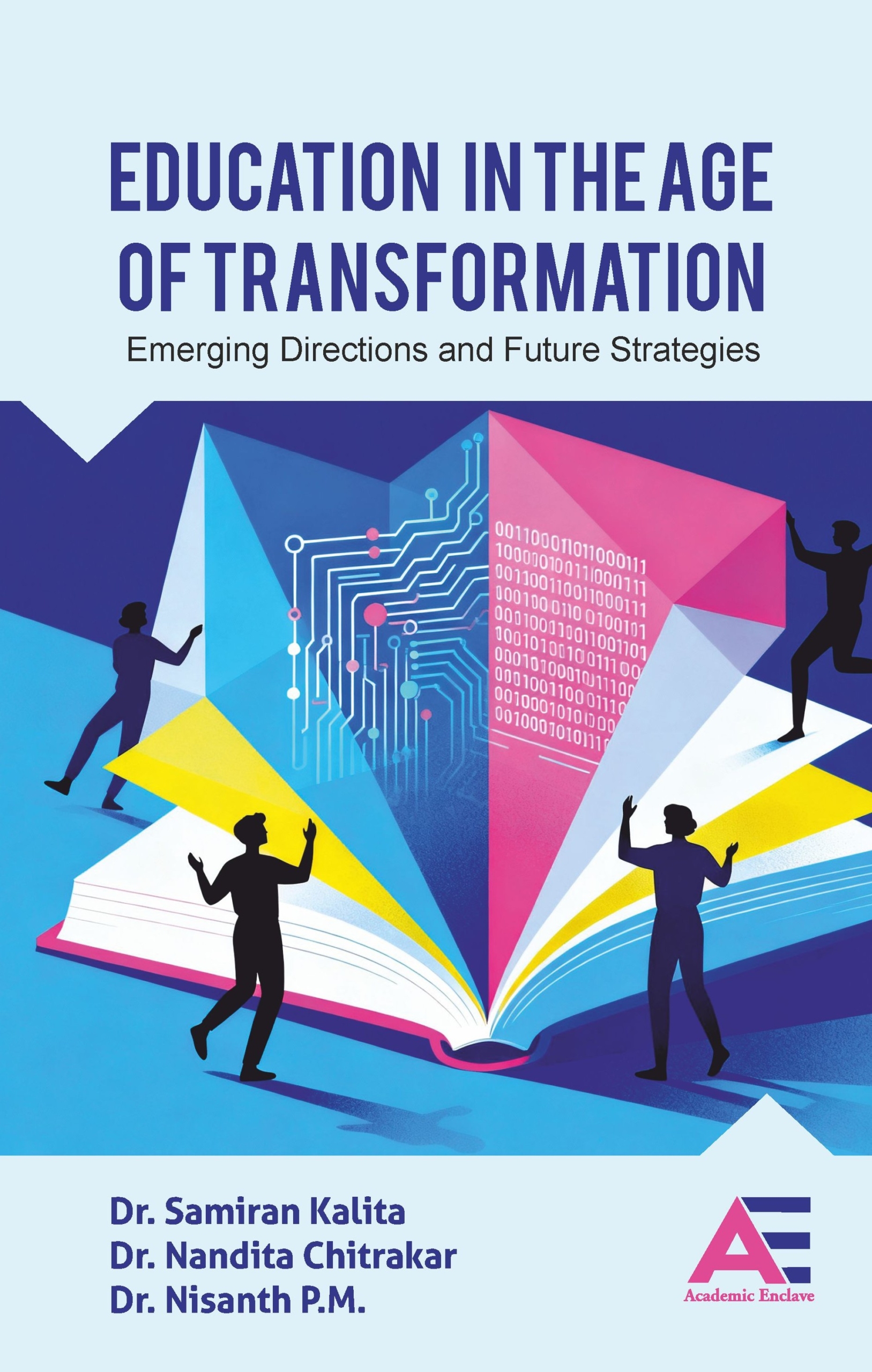
The edited volume Education in the Age of Transformation: Emerging Directions and Future Strategies brings together scholarly insights and empirical studies that explore how education is evolving in response to technological, psychological, and social changes in the 21st century. The book covers diverse themes such as teacher roles, learner well-being, innovative pedagogies, and digital transformations that are reshaping educational practice and policy. By integrating perspectives from psychology, pedagogy, and technology, it aims to provide a comprehensive understanding of the challenges and opportunities in contemporary education. This volume serves as a valuable resource for educators, researchers, and policymakers striving to create inclusive, adaptive, and future oriented learning environments.
Dr. Samiran Kalita is currently serving as an Assistant Professor in Department of Education at Dhing College, Dhing, Nagaon. He holds his Doctoral Degree in Education from Rajiv Gandhi University (A Central University), Arunachal Pradesh. His research interests lie in the fields of Educational Psychology, Sociology of Education and Human psychology. He has numerous publications to his credit which comprises several research papers and book chapters in the field of education and psychology. He has obtained his M.Phil. Degree from Mizoram University (A Central University), Aizawl and completed his U.G. P.G. from Gauhati University, Guwahati.
Dr. Nandita Chitrakar is presently working as an Assistant Professor in the Department of Education at Girijananda Chowdhury University. She has successfully cleared the (UGC-NET) and (SLET) in Education and Teacher Eligibility test (LP TET and UP TET). Dr. Chitrakar earned her Ph.D in Education from Rajiv Gandhi University (A Central University). She completed both her Master degree in Education and B.Ed. from Tezpur University. In addition, she holds a Post Graduate diploma in Educational Management and Administration from IGNOU. Her primary area of interest is Educational Psychology where she continues to explore the psychological principles that shape effective teaching and learning.
Dr. Nisanth. P.M. holds M.Sc. in Psychology, M.Ed., and a Ph.D. in Education from Pondicherry University (A Central University) in Puducherry. He has qualified the UGC NET-JRF in Education and he has supervised four doctoral thesis. He has been serving as Assistant Professor in the Department of Education at Rajiv Gandhi University (A Central University), Arunachal Pradesh, for the past nine years. His academic interests and areas of specialisation include Educational Psychology, Gender and Education, and the application of Artificial Intelligence in Education.
Contents
Preface
Section I: Psychology, Well-being, and Learner Development
1. Positive Psychological Capital in Relation to Organizational Commitment and Quality of Work Life: A Comparative Analysis
between Government and Private School Teachers of Arunachal Pradesh1
Dr. Kakali Goswami & Tapa Zingba
2. Mental Health and Well-being: A Developmental Perspective on Education Scenario11
Dr. G. Panneerselvam
3. The Differential Impact of Intrinsic and Extrinsic Life Goals on Well-being among Students in Arunachal Pradesh23
Dr. Dharmeshwari Lourembam & Tarh Yaza
4. Learning with Peace of Mind: Why Well Being Matters in Education31
Kalpana Sarkar & Dr. Sushant Kumar Nayak
5. The Hidden Cost of Punishment: Effects on Mental Health and Classroom Climate39
Himjyoti Medhi
6. The Tech Effect: Exploring the Impacts of Digital Technologies on the Emotional Health of Adolescents47
Mandakini Deka
Section II: Pedagogical Approaches and the Role of Teachers
7. The Future of Human Teachers in an AI-Powered World55
Dr. Renuprava Sonowal
8. The Role of Teachers in Supporting Student Mental Health59
Dr. Mona Alice Marbaniang
9. Fostering Resilience in Education: The Critical Role of Social Support Networks65
Jhilam Gautam & Dr. Tejoswita Gogoi
10. The Synergy of Eastern and Western Approaches: Exploring the Integration of Mindfulness Practices into Cognitive Behavioral Frameworks77
Kongkana Pathak
Section III: Technology and Innovation in Education
11. Technological Innovations for Teaching and Learning in Higher Education Institutions87
Dr. Kuldeep Kaur Juneja
12. Role of Virtual Education in COVID-19 Era93
Dr. Malabika Borah
13. From Traditional to Flipped Classroom: A Systematic Review of Pedagogical Shifts and Contemporary Applications in India99
Likha Yadi
14. The Transformative Impact of Artificial Intelligence on Personalized Learning in Higher Education107
Saurav Bhaumik & Kigo Raksap
15. AI-Powered Adaptive Learning System: Efficacy and Limitations115
Md. Faruk Ahmed
16. The Ethics and Challenges of AI in Education125
Geyin Miyu & Tongmak Dada
Section IV: Educational Transformations and Emerging Paradigms
17. Good Governance in Assam: Issues, Challenges and Reforms137
Dr. Nabanita Baishya
18. Quality Vs Quantity Education: An Analysis of the Implementation of FYUGP in Colleges in Assam147
Kangkana Sharma
19. Modernizing the Way We Teach: An Innovative Pedagogy in Mastering 21st Century Skills153
Dr. M. Lavanya
20. Digital Transformation in Higher Education in India161
Borsha Rani Das
Reviews
There are no reviews yet.