Description
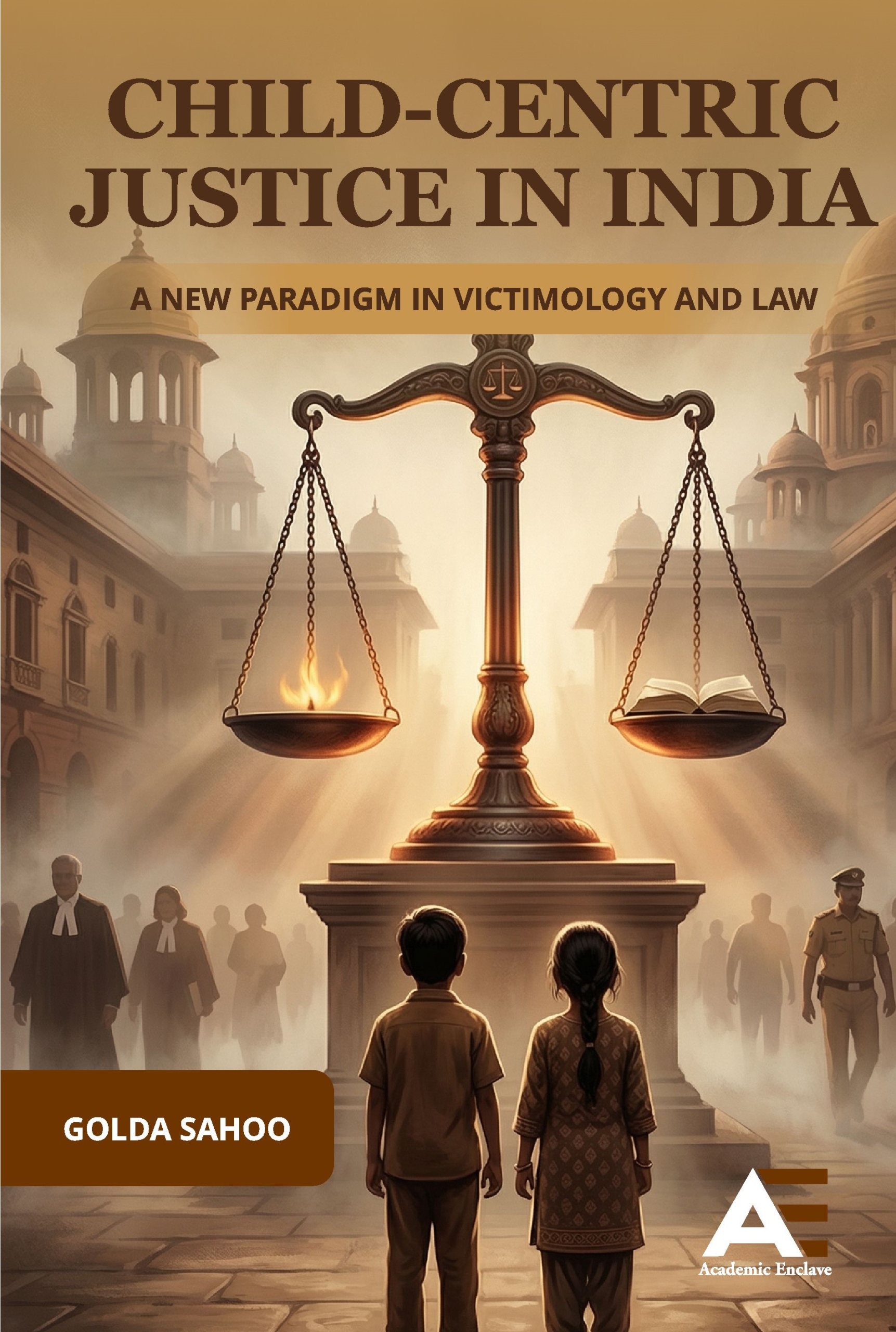
Child-Centric Justice in India: A New Paradigm in Victimology and Law presents a comprehensive ten-chapter exploration of how India’s criminal justice system must transform to meaningfully protect and empower child victims. The second chapter situates child victimisation within modern victimology, critically analysing classical, positivist, and contemporary theories to demonstrate why child victims require a distinct analytical and legal approach. Subsequent chapters analyse institutional mechanisms such as child-friendly courts, support persons, compensation schemes, investigative procedures, and inter-agency coordination. The role of the judiciary is critically evaluated through landmark decisions that reinforce dignity, confidentiality, and best interest standards. The book also assesses systemic gaps including delays, infrastructural limitations, lack of trained personnel, and uneven implementation across states. It integrates empirical insights, national crime data, and policy developments to demonstrate the growing urgency of reform. Overall, the book argues that embedding a child-centric and victim-oriented approach is not merely a policy choice but a constitutional, ethical, and developmental imperative for building a humane and responsive justice system in India.
About the Author
Ms. Golda Sahoo is an academician and researcher specialising in Criminal Law and Victimology. She serves as Assistant Professor of Law and Faculty-in-Charge of the Centre for Studies in Victimology at Tamil Nadu National Law University. She has contributed scholarly chapters to leading national and international publications, including works published by Bloomsbury and Apple Academic Press (Taylor & Francis Group), Ambra University Press (USA), Brazilian Journal of Alternative Dispute Resolution. Recently, she edited the international volume The Power of Women: Health, Feminism and Sustainable Activism, (Farabi Publishing House Ankara, Türkiye) reflecting her interdisciplinary engagement. Through her teaching, research, and institutional leadership, Ms. Sahoo remains committed to advancing a child-sensitive, victim-centred, and rights-based criminal justice system in India.
Contents
Acknowledgementv
Prefacevii
1. Understanding Child-Centric Justice1
1.1 Introduction2
1.2 Concept of Child-Centric Justice3
1.3 Evolution of Child Rights and Justice Paradigms4
1.4 Core Principles of Child-Centric justice5
1.5 Why Child-Centric Justice Is Essential8
1.6 Philosophical and Ethical Foundations9
1.7 Components of a Child-Centric Justice System12
1.8 International Legal Framework on Child-Centric Justice13
1.9 Indian Context: Shift from Protection to Empowerment15
1.10 Rationale for a Child-Centric Approach to Criminal Justice Reform16
1.11 Conclusion17
2. Victimology and the Child Victim A Theoretical Overview19
2.1 Introduction to Victimology: From Classical to Modern Perspectives20
2.2 Typologies of Victims and Relevance to Children22
2.3 Theories of Victimization and Child Abuse23
2.4 Psychological Dimensions of Child Victimization27
2.5 The Emergence of Child Victimology28
2.6 Linking Victimology with Child Protection Systems35
2.7 Summary and Implications for Justice Policy36
3. Restorative and Trauma-Informed Approaches39
3.1 Introduction40
3.2 Rethinking Child Justice40
3.3 Trauma-Informed Justice: Conceptual Foundations and Systemic Implications41
3.4 Link between trauma and criminal behavior44
3.5 Trauma-Informed Justice and Procedural Fairness in the Courtroom44
3.6 Elements of Trauma-Informed Justice45
3.7 Benefits of a Trauma-Informed Justice System51
3.8 Trauma-Informed Justice in Child-Centric Contexts52
3.9 Trauma-Informed Justice in India55
3.10 International Models and Evidence58
3.11 Restorative Justice in Cases of Child Sexual Abuse61
3.12 Integrating Trauma-Informed and Restorative Approaches in Practice61
3.13 Complementarity with Criminal Justice64
3.14 Professional Training and Standards65
3.15 Relevance and Adaptation for India66
3.16 Institutional and Cultural Challenges in India68
3.17 Policy Recommendations71
3.18 The Way Forward74
4. Legislative Foundations77
4.1 Introduction: Reimagining Child-Centric Justice in India78
4.2 Evolution of India’s Legal Framework79
4.3 Legislative Pathways Towards Child-Centric Justice80
4.4 Criminal Law Amendments as Instruments for Strengthening Child-Centric Justice99
4.5 Information Technology Act, 2000 107
4.6 Conclusion108
5. Judicial Approaches and Key Precedents in Safeguarding Child Victims111
5.1 Landmark Supreme Court Judgments113
5.2 High Court Innovations118
5.3 Analysis of Judicial Trends : Rights vs. Procedure Balance122
5.4 Key Findings127
6. Institutions and Support Mechanisms for Child Victims129
6.1 Role of Stakeholders Under POCSO Act 2012 and Rules, 2020130
6.2 Systemic Challenges in Child Protection147
6.3 Conclusion148
7. International and Comparative Models of Child Justice151
7.1 International Normative Frameworks152
7.2 Optional Protocol on the Sale of Children, Child Prostitution and Child Pornography (OPSC, 2000)154
7.3 UN Guidelines on Justice in Matters involving Child Victims and Witnesses of Crime (2005)154
7.4 Council of Europe Lanzarote Convention (2007)156
7.5 WHO–UNICEF INSPIRE Strategies (2016)159
7.6 Global Best Practices in Child-Centric Justice161
7.7 Conclusion: Towards an Integrated, Child-Centric Indian Model177
8. Interdisciplinary Professional Practice and Coordination in Child-Centric Justice179
8.1 Child-Centric Justice and the Limits of Single-Discipline Responses180
8.2 Theoretical Foundations of Interdisciplinary Practice in Victimology180
8.3 Ethical Foundations of Interdisciplinary Child Justice188
8.4 Capacity Building and Professional Training188
8.5 Concluding Remark189
9. Systemic Barriers and Implementation Gaps191
9.1 Conceptual and Legal Framework192
9.2 Structural Barriers in Implementation193
9.3 Procedural Barriers and Systemic Failures194
9.4 Over-Criminalisation and Adolescent Relationships195
9.5 Medico-Legal and Forensic Gaps196
9.6 Investigative Failures and Lessons from Serious Crimes198
9.7 Structural Gaps and Jurisdictional Challenges of Special Courts199
9.8 Judicial Interpretation of Medical Margin of Error in Age Assessment200
9.9 Consent in Cases Involving Alleged Romantic Relationships200
9.10 Judicial Scrutiny of the Victim’s Character201
9.11 Adverse Inferences Drawn from the Absence of Physical Resistance202
9.12 Discrepancies in Official Records and Their Evidentiary Impact203
9.13 Failure to Examine Independent Witnesses204
9.14 Impact of Systemic Barriers on Child Survivors204
9.15 Empirical Assessment of Child Victim Justice in India 205
9.16 Pathways for Reform208
10. Policy Reform and the Child Victim Justice Model209
10.1 Constitutional Mandate and Child Rights Framework210
10.2 Strengthening Institutional Mechanisms and Accountability Systems211
10.3 Procedural Reform under the POCSO Framework212
10.4 Integrating Restorative and Trauma-Informed Justice213
10.5 Outreach, Access, and Equity214
10.6 Operationalising the Child Victim Justice Model214
Observations215
Reimagining Justice Through a Child-Centric Lens215
Reference217


Reviews
There are no reviews yet.